Gum Contouring: What It Can Change and What to Expect

Gum contouring reshapes the gumline to show more tooth structure, improve symmetry, or reduce excess gum display. It can create a more balanced smile, but the right approach depends on why the gums look uneven and whether the tissue and supporting bone can support a stable result.

It is often part of broader cosmetic dentistry planning when tooth and gum proportions need refinement. Before any tissue is removed, the teeth, gums, and underlying bone should be examined to confirm that contouring is appropriate.

If uneven gums or a gummy smile are making your teeth look short or your smile feel unbalanced, cosmetic dentistry can help identify the most predictable way to improve proportions. Dr. Scott R. Adishian in Arcadia, CA provides advanced restorative and cosmetic care to evaluate the cause and guide a personalized treatment plan.

How Gum Contouring Works

Gum contouring removes and reshapes small amounts of gum tissue to create a more even gumline. Treatment may be completed with a laser, an electrosurgical instrument, or traditional surgical tools, and local anesthetic is used to keep the area comfortable.

Some cases involve only the visible gum tissue. If the supporting bone sits too close to the planned new gumline, a surgical crown-lengthening procedure may also be needed.

This periodontal resective procedure can reshape bone as well as gum tissue to help create a healthier, more stable contour. That distinction matters because removing gum tissue alone does not always produce a lasting result.

Treatment may involve one tooth, several teeth, or the full smile line. Planning usually considers tooth proportions, lip movement, gum symmetry, existing restorations, and the position of the underlying bone.

Who May Benefit From Treatment

Gum contouring is often considered when excess gum tissue covers part of otherwise healthy teeth, making them look short or creating a gummy smile. It may also help refine an irregular gumline when teeth differ in shape, length, or position.

The procedure can also support restorative treatment by exposing enough healthy tooth structure for a dental crown or veneer. When veneers are planned, combining contouring with dental veneers can improve final tooth proportions and smile balance.

An uneven gumline can have several causes, including inflammation, recession, altered passive eruption, medication-related tissue enlargement, tooth position, or differences in the supporting bone. The cause should be identified before treatment because contouring does not correct every source of asymmetry or excess gum display.

Healthy gums are important before cosmetic reshaping is considered. A periodontal evaluation during routine dental exams & cleanings can help confirm whether the tissue is healthy enough for treatment.

Benefits and Limits

When carefully planned, gum contouring can make teeth look more even and improve the balance between teeth and gums. It can also create cleaner margins around crowns or veneers and support a more polished final result.

The improvement is often subtle rather than dramatic. The goal is usually a natural-looking gumline that fits the teeth, not a perfectly identical outline around every tooth.

Gum contouring does not whiten teeth, close spaces, correct significant crowding, or reduce excessive lip movement. If those factors are driving the concern, orthodontics, restorative dentistry, periodontal therapy, or another treatment may be more appropriate.

Removing too much tissue can expose roots, increase sensitivity, make teeth look too long, or reduce support around the teeth. Conservative planning is especially important in patients with thin tissue, active periodontal disease, uncontrolled medical conditions, or a history of recession.

Recovery and Healing

Mild soreness, swelling, and slight bleeding are common during the first few days. Surface healing often improves within one to two weeks, while deeper tissue remodeling may continue for several weeks or longer.

Patients should keep the area clean without causing unnecessary irritation and follow instructions for brushing, eating, and follow-up care. Smoking and nicotine use can make it harder for gums to heal and may increase the risk of complications.

Call the treating dental office if bleeding does not stop, swelling worsens, pain becomes severe, fever develops, pus appears, or a bad taste persists. Trouble breathing or swallowing requires urgent medical attention.

Appearance, Function, and Longevity

The gumline may change slightly as swelling resolves and the tissue matures. If veneers, crowns, or other restorations are planned, the dentist may recommend waiting until the contour stabilizes before finalizing them.

After restorations, following care for porcelain dental veneers can help protect restoration margins and gum health. This is especially important when cosmetic and restorative changes are being coordinated.

Results can last for many years when the tissue and underlying bone are managed properly and the gums remain healthy. Gum disease, chronic inflammation, aggressive brushing, tooth movement, and some medical or medication-related factors can still change the gumline over time.

Balance a Better Gumline With Long-Term Stability
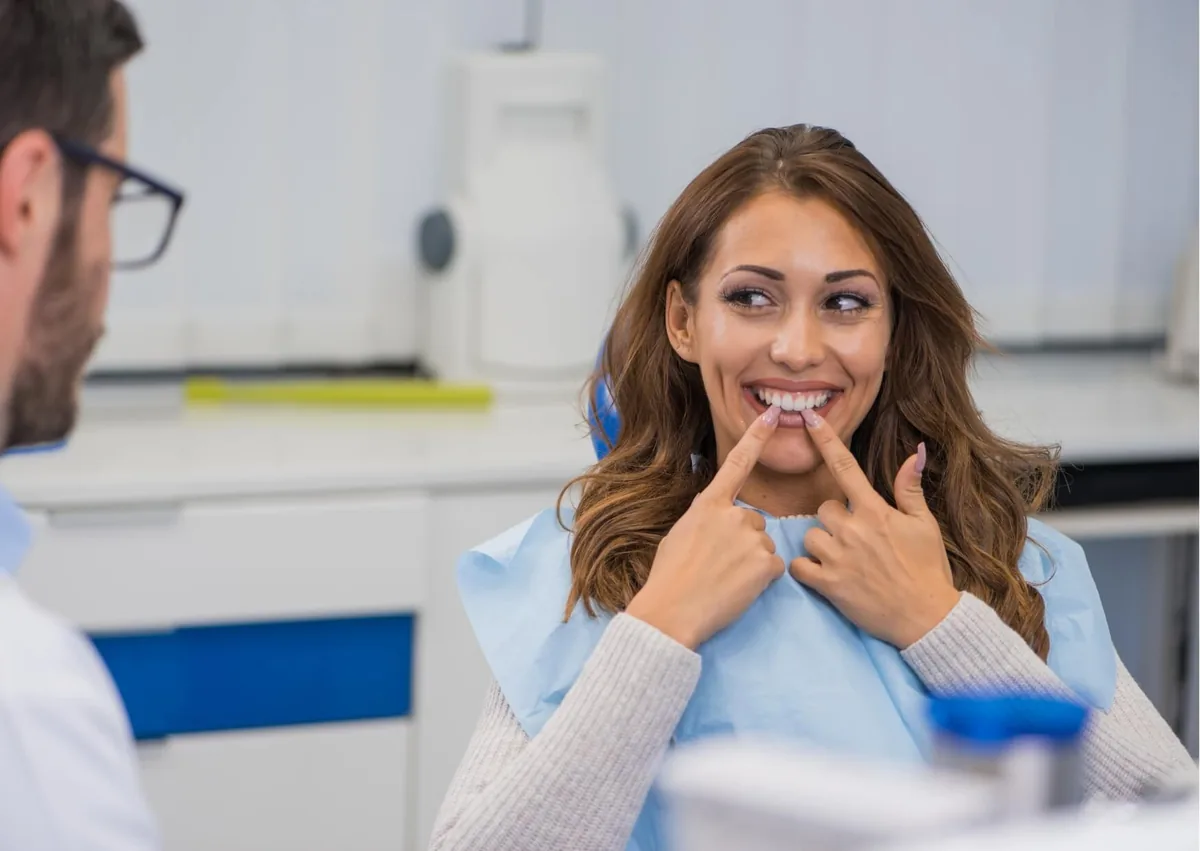
Woman discussing her smile and gumline with a dentist during a gum contouring consultation.

When several cosmetic changes are being considered together, gum contouring is often part of a smile makeover so aesthetic and restorative decisions stay coordinated. Procedures such as dental bonding may also be used to improve tooth shape and symmetry.

A specialist-led evaluation can determine whether simple tissue contouring, crown lengthening, periodontal treatment, orthodontics, or a combined plan is the better fit. A periodontist is especially valuable when bone reshaping, thin tissue, recession risk, or complex restorative planning is involved.

A specialist consultation can confirm whether gum contouring, crown lengthening, or related cosmetic dentistry best meets your goals and ensures a stable result. Contact Dr. Scott R. Adishian for cosmetic dentistry in Arcadia, CA. Call (626) 796-3700 to discuss options and arrange a consultation or schedule your visit.

FAQs

Is gum contouring painful?

Local anesthetic usually prevents pain during the procedure. Some soreness or sensitivity afterward is possible, and discomfort tends to depend on how much tissue or bone was treated.

Can gums grow back after contouring?

A small amount of tissue rebound can happen in some cases. Predictability is better when the cause of the gummy or uneven appearance is diagnosed correctly and the bone position is considered during treatment planning.

Is gum contouring only cosmetic?

No. It may be done for cosmetic reasons, but it can also expose healthy tooth structure for a restoration and help create a stable gumline around dental work.

How much does gum contouring cost?

Cost depends on how many teeth are treated, the technique used, whether bone reshaping is needed, and whether restorative care is part of the plan. Insurance may help when treatment is medically or restoratively necessary, but purely cosmetic treatment is often not covered.

Who should not have gum contouring?

Treatment may need to be delayed or avoided when active gum disease, untreated decay, poor plaque control, or certain medical risks are present. An examination and, when needed, dental X-rays or periodontal measurements help determine whether the procedure is safe and likely to remain stable.
Related Articles

What Is a Flipper Tooth?

Losing a front tooth or planning an extraction can make eating, speaking, and smiling feel awkward very quickly. A flipper tooth is one of the fastest ways to fill that space while a more permanent plan is being considered.

A flipper tooth is a removable temporary partial denture. It usually includes one or more replacement teeth attached to a lightweight acrylic base that rests against the gums. In most cases, it is meant to improve appearance first, with only limited help for chewing.

Dentists often use a flipper after an extraction, during implant healing, or while a crown, bridge, or partial denture is being made. It can be a practical short-term option, especially when a visible front tooth is missing.

Dr. Adishian's prosthodontics practice in Arcadia, CA provides advanced restorative planning and temporary solutions like flippers.

How a Flipper Tooth Works

A flipper is custom made from an impression or digital scan of the mouth. The replacement tooth is shaped to blend with nearby teeth, and the acrylic base helps hold it in place.

Some flippers stay in position by lightly engaging the natural contours of nearby teeth. Others use small clasps. Even with a good fit, a flipper is usually less secure than an implant crown, bridge, or well-designed long-term partial denture.

Because it rests partly on the gums, the fit can change as the tissues heal. This matters most after a recent extraction, when the ridge often shrinks during the first few months.

When Dentists Recommend a Flipper Tooth

A flipper tooth is often recommended when appearance is the main immediate concern. This is especially common when a front tooth is missing and the patient wants a quick, removable replacement.

Common situations include:

A flipper usually works best as a transition appliance, not as a long-term solution. It can be very useful, but its strengths and limits should be clear from the start.

What a Flipper Tooth Can and Cannot Do

A flipper can make a smile look more complete within a short time. For many patients, that alone makes social situations and work interactions much easier.

It may also help with speech if the missing tooth changes how certain sounds are formed. There is often a short adjustment period, and some people notice a slight lisp at first.

Its limits matter just as much. A flipper is usually not strong enough for heavy chewing, and it may feel bulky or mobile during meals.

It can also place pressure on healing gums, which is one reason dentists monitor the fit closely after extractions. A good flipper should improve appearance without being mistaken for a permanent tooth.

How It Compares With Other Tooth Replacement Options

Patients searching for what a flipper tooth is often also want to know whether it is the best option. The answer depends on timing, budget, healing, and the condition of nearby teeth.

Flipper Tooth vs. Dental Implant

A dental implant replaces the tooth root and supports a crown that is fixed in place. It is usually the most stable and natural-feeling option, but it takes more time, enough bone support, and a greater financial commitment.

A flipper is much faster and less invasive. It does not preserve bone the way an implant can, and it is not meant to handle the same chewing forces. For a step-by-step look at that process, see the implant placement process.

Flipper Tooth vs. Dental Bridge

A dental bridge is fixed in the mouth and usually feels more secure than a flipper. It may be a good option when the neighboring teeth already need crowns, but it often requires reshaping those teeth.

A flipper does not usually require that kind of tooth preparation. That makes it more conservative in the short term, but also less durable.

Flipper Tooth vs. Partial Denture

A long-term dentures & partials appliance is generally stronger and more stable than a flipper. It is often made with a more durable framework and is intended for longer use.

To compare temporary flippers with more durable appliances, read about partial dentures. A flipper is typically lighter and simpler, which is useful during healing but comes with trade-offs in comfort and function.

OptionMain UseStabilityDurabilityBest Fit
Flipper toothTemporary replacementLow to moderateLimitedShort-term cosmetic gap coverage
Dental implantLong-term fixed replacementHighHighSingle missing tooth with adequate bone
BridgeLong-term fixed replacementModerate to highModerate to highMissing tooth with suitable neighboring teeth
Partial dentureRemovable longer-term replacementModerateModerateMultiple missing teeth

What It Feels Like to Wear One

A flipper tooth often feels noticeable at first. The acrylic base takes up space along the gums or palate, so the mouth may need several days to adjust.

Mild pressure can be normal when the appliance is new, especially if it was made soon after an extraction. Sharp pain, pinching, sores, or a fit that suddenly becomes loose should be checked by a dentist.

Chewing usually requires some caution. Softer foods are often easier at first, and biting directly into hard foods with the flipper tooth is usually not ideal.

Speech can also change briefly. Most patients adjust, but a flipper that clicks, lifts, or consistently interferes with speaking may need an adjustment.

How Long a Flipper Tooth Lasts

A flipper tooth is usually considered a temporary appliance. In many cases, it is worn for weeks to months rather than years.

How long it lasts depends on the material, how often it is worn, whether the mouth is healing, and how much chewing stress it takes. Acrylic can crack, and the fit may change as the gums and bone remodel after extraction.

Some patients do end up wearing a flipper longer than planned. That can happen, but it is usually not ideal if comfort, bite stability, and tissue health are the goals.

Cleaning and Daily Care

A flipper tooth needs regular cleaning because it can collect plaque, food debris, and stain. Plaque is a soft bacterial film that can irritate the gums and contribute to odor.

It should be handled carefully because acrylic can fracture if dropped. Patients should follow their dentist’s instructions for wear time, cleaning, and when to remove it.

The ADA’s guidance on denture care can also help patients understand the basics of cleaning removable appliances safely. Any removable appliance that starts to smell, feel rough, or cause sore spots deserves attention.

Possible Problems and Red Flags

Most flipper issues are minor and fixable, but some deserve prompt evaluation. A flipper that no longer fits can rub the gums, trap food, and interfere with healing.

Contact a dentist promptly if there is increasing pain, swelling, bleeding, pus, fever, or a bad taste that does not improve. These signs of infection may point to a healing problem rather than a simple appliance adjustment.

Cracks, repeated slipping, or pressure on neighboring teeth should also be assessed. If the appliance was placed after an extraction, follow-up is especially important because the shape of the ridge can change quickly.

Who May Not Be a Good Candidate

A flipper may not work well if there are very few supporting teeth, significant bite instability, or limited space for the appliance. It can also be a poor fit for patients who want a strong chewing function from the start.

Some people find removable appliances difficult to tolerate because of gagging, dry mouth, or sensitivity along the palate. Others may do better with a bridge, implant, or a more durable partial denture design.

This is one reason a proper exam matters. The best tooth replacement is not just about filling a gap. It is also about how the bite works, how the tissues are healing, and what result is realistic over time.

What to Expect at the Dental Visit

Patient discussing a flipper tooth with a dentist during a consultation for temporary tooth replacement options.

The visit usually starts with an exam of the missing tooth area, the bite, and the health of the surrounding teeth and gums. dental X-rays may be needed if the dentist is planning around an extraction site, implant timing, or bone support.

An impression or digital scan is then used to make the appliance. The dentist will also choose the tooth shade and shape so the result blends as naturally as possible.

After delivery, small adjustments are common. A flipper that looks acceptable but causes pressure spots is not truly successful, so follow-up matters more than many patients expect.

A Thoughtful Plan Leads to Better Long-Term Results

If the main question is what a flipper tooth is, the short answer is this: it is a temporary removable tooth replacement used to fill a gap while the mouth heals or while a more durable option is being planned. It can be a very practical solution, especially for a front tooth, but it works best when patients understand its limits.

A well-made flipper can restore confidence quickly and create time for careful treatment planning. If a missing tooth, upcoming extraction, or unstable temporary is affecting comfort or appearance, prosthodontics can help explain whether a flipper makes sense or whether another option would serve the mouth better long term.

Dr. Adishian's prosthodontics practice in Arcadia, CA can help patients from Arcadia and nearby communities with personalized restorative planning; call our office at (626) 796-3700 to schedule a consultation.

FAQs

Is a flipper tooth permanent?

No. A flipper tooth is usually a temporary appliance, even if some patients wear one longer than originally planned.

Can you eat with a flipper tooth?

Usually yes, but function is limited. Softer foods are often easier, and heavy biting on the replacement tooth may loosen or damage the appliance.

Does a flipper tooth look natural?

It can look quite natural from a conversational distance, especially when replacing a front tooth. The final appearance depends on the fit, tooth shade, smile line, and the condition of the surrounding gums.

Is a flipper tooth painful?

It should not cause significant pain. Mild pressure or an adjustment period can be normal, but persistent soreness, ulcers, or worsening pain should be checked.

What is better than a flipper tooth?

For long-term stability and function, many patients do better with an implant, bridge, or a stronger partial denture. The best choice depends on healing, budget, bite forces, and the condition of nearby teeth.

Related Articles

Crowns vs. Veneers: Choosing the Right Restoration

A damaged, worn, or uneven front tooth can affect more than appearance. It can change how your smile looks, how your teeth come together, and sometimes how confidently you speak or laugh.

When comparing crowns vs. veneers, the simplest answer is this: veneers usually improve the front surface and visible shape of a tooth, while crowns cover the entire tooth and are typically used when more structural support is needed. The right choice depends on how much healthy tooth remains, where the tooth sits in the bite, and whether the goal is cosmetic, functional, or both.

Both treatments can look natural when they are planned well. The better option is the one that fits the condition of the tooth and the forces that the tooth handles every day.

At Scott Adishian, DDS, our practice in Arcadia, CA provides advanced restorative and cosmetic dental care, including expert crown and veneer options.

The Core Difference Between Crowns and Veneers

A dental veneer is a thin custom shell, usually made of porcelain, that bonds to the front of a tooth. It is most often used on visible teeth when the main concerns are color, shape, minor wear, small chips, or slight spacing issues.

A dental crown covers the whole tooth above the gumline, not just the front. Because it wraps around the tooth, a crown is generally used when a tooth is weakened, heavily filled, cracked, root canal treated, or worn down enough that a veneer would not provide enough support.

This difference matters because dentistry is not only about appearance. A restoration also has to tolerate chewing pressure, temperature changes, and daily function without putting the tooth underneath at risk.

When Veneers Usually Make More Sense

Veneers are often a good option when teeth are healthy overall but do not look the way a patient wants. Common reasons include deep staining that does not respond well to whitening, small chips, short teeth from mild wear, uneven edges, and minor shape differences.

They can also work well when a patient wants a more uniform smile with conservative tooth reduction. In many cases, that means less natural tooth structure is removed than with a full crown.

Veneers do have limits. If a tooth has a large filling, a crack, significant decay, or heavy bite stress, a veneer may not be the safest long-term choice.

Veneers Are Often Best For

Bonding matters here. Enamel is the strong outer layer of the tooth, and veneers tend to perform best when there is reliable bonding to enamel.

This article about dental veneers explores common indications, material choices, and what to expect during treatment.

When Crowns Are Often the Better Option

Crowns are usually recommended when the tooth needs protection as much as appearance. A tooth that is fractured, heavily restored, badly worn, or weakened after root canal treatment may need full coverage to reduce the risk of further breakdown.

This is especially relevant for back teeth, where chewing forces are much higher. In those cases, preserving function and strength usually matters more than choosing the most conservative cosmetic option.

A crown may also be the better choice when the tooth has limited healthy enamel left. If there is not enough sound tooth structure for predictable veneer bonding, a crown can provide a more reliable restoration.

Crowns Are Often Best For

In many cases, this is where the answer becomes clearer. If the tooth is mostly healthy but unattractive, veneers may fit; if the tooth is compromised, a crown may be the safer restoration.

This blog about dental crowns explains when full coverage is recommended and the benefits it can provide.

How Dentists Decide Between Crowns and Veneers

The decision is not based on one factor. A dentist usually evaluates the amount of remaining tooth structure, the position of the tooth, the bite pattern, signs of grinding or clenching, gum health, and the final cosmetic goal.

Photos, dental X-rays, and a close bite evaluation often matter as much as the visible chip or stain. A tooth can look like a veneer case from the front but behave more like a crown case once the bite and existing restorations are assessed.

This is also why online comparisons can be misleading. The same front tooth in two different patients may need two different treatments because the support, wear pattern, and chewing forces are not the same.

How crowns are made describes the fabrication steps and how they affect fit and longevity.

Bite Forces Can Change the Plan

If a patient clenches or grinds, the risk of edge chipping, debonding, or overload increases. That does not always rule out veneers, but it does affect how cautiously they should be planned and whether protective steps such as a night guard should be discussed.

Gum Position and Smile Line Matter Too

A very visible smile line can make small differences in shape, translucency, and gum symmetry more noticeable. In cosmetic cases, the final result depends not only on the restoration itself but also on how it relates to neighboring teeth and the gums.

Appearance, Strength, and Tooth Preservation

Patients sometimes assume veneers always look better and crowns are only for damaged teeth. That is too simple.

Modern porcelain crowns can look highly natural, and well-designed veneers can be very durable. The more useful comparison is this: veneers usually preserve more natural tooth structure when the tooth is a good candidate, while crowns usually provide more coverage and support when the tooth is already compromised.

Neither option is automatically better in every case. For front teeth, appearance often comes down to planning, material choice, and preparation design.

Shade, translucency, edge shape, and the way light passes through the restoration all affect whether the result looks believable. For strength, the key question is not which restoration is strongest in isolation, but which one is strongest for that specific tooth in that specific bite.

What to Expect for Longevity

Both crowns and veneers can last many years when they are well made and properly maintained. Longevity depends on oral hygiene, bite forces, diet, grinding habits, gum health, and whether the underlying tooth stays healthy.

No restoration lasts forever. Veneers can chip, debond, or become less ideal if the tooth changes over time, and crowns can also wear, loosen, fracture, or develop decay at the margin, which is the edge where the restoration meets the tooth.

Patients usually do best when they stop thinking in terms of permanent versus temporary and start thinking in terms of long-term maintenance. Good dentistry should age predictably, be monitorable, and fit the biology of the tooth.

Published veneer survival rates also support the idea that longevity depends heavily on case selection, technique, and maintenance rather than the label alone.

Veneer care tips offer practical advice for protecting porcelain veneers and helping them last.

A Side-by-Side Comparison

FeatureVeneersCrowns
Main purposeCosmetic improvement of the front surfaceFull coverage for strength, protection, and appearance
Tooth coverageFront of the tooth onlyEntire visible portion of the tooth
Typical useStains, shape changes, small chips, mild wearLarge fillings, cracks, root canal treated teeth, heavier wear
Tooth reductionOften more conservativeOften more extensive
Best locationUsually front teethFront or back teeth
Bonding needsWorks best with healthy enamelLess dependent on front-surface enamel alone
Main limitationNot ideal for significantly weakened teethRequires more full-tooth preparation in many cases

Situations That Need Prompt Evaluation

Patient receiving a dental evaluation to determine whether a crown or veneer is the best treatment option.

Sometimes the question is no longer crowns vs. veneers. If a tooth has pain with biting, spontaneous pain, swelling, a visible crack, gum bleeding around an old restoration, or a piece that recently broke off, the first priority is diagnosis, not cosmetic planning.

A prosthodontics consultation is often the best next step for complex cases where appearance and function must be balanced carefully. A cracked or infected tooth needs prompt dental evaluation.

Waiting too long can reduce treatment options and, in some cases, make the tooth harder to save. Urgent symptoms do not always mean the tooth needs a crown, but they do mean it should be assessed before decisions are made based mainly on appearance.

Loose crown treatment explains why prompt care matters when a crown feels loose.

How to Think About the Right Choice

If the main goal is to improve the look of a healthy front tooth, veneers may be the more conservative and elegant option. If the tooth is already structurally compromised, a crown is often the more responsible choice.

That distinction sounds simple, but real cases are not always that neat. Some teeth fall in the middle, where the best answer depends on bite risk, existing dental work, and how much natural structure can be preserved safely.

A careful cosmetic and restorative consultation should clarify what the tooth needs now, which risks matter most over time, and what result is realistic. That kind of planning usually leads to better decisions than choosing the treatment that sounds more appealing in a quick online comparison.

If you would like a specialist opinion, Scott Adishian, DDS offers prosthodontic consultations in Arcadia, CA to help determine whether a crown or veneer is right for you. Call (626) 796-3700 to schedule.

FAQs

Are veneers better than crowns?

Not inherently. Veneers are often better for cosmetic changes on otherwise healthy front teeth, while crowns are often better for teeth that need more protection and support.

Do crowns look less natural than veneers?

Not necessarily. Well-made crowns can look very natural, especially on front teeth when shade, shape, and translucency are planned carefully.

Do veneers damage teeth more than crowns?

Usually the opposite in appropriate cases. Veneers often require less tooth reduction than crowns, but they are not suitable for every tooth.

Can a badly worn tooth get veneers instead of crowns?

Sometimes, but not always. It depends on how much tooth structure remains, the bite pattern, and whether the tooth can safely support a bonded restoration.

Which lasts longer, crowns or veneers?

Either can last well when case selection is appropriate and the restoration is maintained properly. Longevity depends less on the label and more on the health of the tooth, the bite, and the quality of planning.

Related Articles

What Is Full Mouth Reconstruction?

If chewing feels difficult, several teeth are damaged, or your bite no longer feels stable, full mouth reconstruction may be the kind of care that fits the problem. It is not a single procedure. It is a planned combination of restorative treatments used to rebuild how the teeth, bite, and jaw work together.

In plain terms, full mouth reconstruction means restoring most or all teeth in the upper and lower arches when there is widespread damage, tooth loss, severe wear, infection, or bite breakdown. The goal is not only to improve appearance. Its main purpose is to restore function, comfort, oral health, and long-term stability.

Dr. Adishian offers prosthodontic dentistry in Arcadia, CA, providing the kind of comprehensive restorative care described above.

When Full Mouth Reconstruction May Be Recommended

Full mouth reconstruction may be recommended when dental problems are widespread rather than limited to one or two teeth. In many cases, trying to patch each issue separately leads to repeated repairs without solving the underlying bite or structural problem.

Common reasons include multiple missing or failing teeth, advanced tooth wear from grinding or acid erosion, large broken fillings, repeated fractures, severe decay, gum disease with tooth instability, and bite collapse. 

Bite collapse means the teeth no longer meet in a healthy, balanced way, which can affect chewing, speech, and comfort.

Some patients need this kind of treatment after years of delayed care. Others need it after trauma, long-term clenching, untreated reflux-related erosion, or complex dental work that has worn out over time.

Needing extensive treatment does not always mean every tooth must be crowned or replaced. A careful plan usually aims to save healthy tooth structure whenever possible.

What Treatments Can Be Part of It

The treatment mix depends on what is damaged, what can be saved, and how the bite needs to be rebuilt. Each reconstruction is customized, but the sequence is usually similar: control disease first, stabilize the foundation, and then restore function and appearance.

Restoring Damaged Teeth

Teeth that are cracked, heavily filled, worn down, or weakened may be restored with crowns, onlays, or bonded restorations. These treatments help protect the tooth and rebuild its shape so the bite can function more evenly.

In many cases, dental crowns or onlays provide the strength and shape needed for long-term function.

Replacing Missing Teeth

Missing teeth may be replaced with dental implants, implant-supported bridges, or dentures. The right option depends on bone support, gum health, the number of missing teeth, medical history, and how much stability is needed.

When many teeth must be replaced at once, implant-supported full-arch options such as full mouth implants are often considered, or all-on-4 implants for the appropriate candidate.

Treating Infection or Deep Damage

If a tooth has infection or nerve damage, root canal treatment may be needed before final restoration. Teeth that cannot be predictably saved may need extraction as part of the larger plan.

Improving Gum and Bone Support

Healthy gums are essential before major restorative work. Periodontal treatment may be needed to reduce inflammation, manage gum disease, or improve support around teeth and implants.

Correcting Bite Problems

Some patients need orthodontic treatment to move teeth into better positions before crowns or implants are placed. In selected cases, adjusting tooth shape and rebuilding worn surfaces can improve bite balance without braces.

Managing Grinding and Jaw Strain

If clenching or grinding is contributing to damage, the plan may include a protective night guard after reconstruction. This does not cure grinding, but it can reduce wear and help protect the new restorations.

How It Differs From a Smile Makeover

This is one of the most important distinctions. A smile makeover focuses mainly on appearance, while full mouth reconstruction is driven by health and function first.

Cosmetic dentistry may include whitening, veneers, or contouring for patients whose teeth are otherwise healthy and stable. Full mouth reconstruction is usually recommended when there are structural, infectious, or bite-related problems that need comprehensive correction.

The two can overlap. A well-planned reconstruction often improves the smile significantly, but the aesthetic result is built on a healthier and more durable foundation.

What the Planning Process Usually Looks Like

Dentist discussing a personalized full mouth reconstruction treatment plan with a patient during a dental consultation.

Good reconstruction starts with diagnosis, not with choosing crowns or implants too early. The exam often includes dental X-rays, periodontal measurements, photos, digital scans, and a close review of chewing patterns, jaw comfort, and existing dental work.

A dentist may also evaluate how the front teeth guide movement, how much tooth structure remains, and whether the current bite is overloading certain areas. In complex cases, study models or a digital wax-up may be used to preview the new tooth shapes and bite relationship.

Treatment is often staged. Disease control comes first, then extractions or gum treatment if needed, then temporary or transitional restorations, and finally the long-term restorations.

That sequence matters. A responsible treatment plan should explain not only what will be done, but also why the order is important.

What to Expect During Treatment

Full mouth reconstruction usually takes time. Some cases are completed in a few months, while others take much longer if healing, implant integration, orthodontics, or periodontal treatment is involved.

Temporary restorations are often part of the process. These help test the bite, appearance, speech, and comfort before the final restorations are made.

This trial phase is especially valuable in worn or collapsed bites. It gives the dental team a chance to refine tooth length, chewing balance, and jaw comfort before the final result is completed.

Appointments may involve more than one specialty, and the schedule may not be perfectly linear. That is normal in complex dentistry. What matters is that each step supports the next one rather than creating new strain elsewhere in the mouth.

Benefits, Limits, and Long-term Outlook

A successful reconstruction can improve chewing efficiency, comfort, speech, appearance, and confidence. It may also reduce repeated breakage if the bite is rebuilt in a more stable way.

That said, no dental work lasts forever. Even excellent restorations can wear, loosen, chip, or need replacement over time, especially in patients who grind, have dry mouth, or struggle with gum disease control.

The long-term outlook depends on diagnosis, material choice, bite design, home care, and regular maintenance visits. Restoration longevity is usually better when the underlying cause of damage is addressed, not just the visible damage itself.

It is also important to keep expectations realistic. Reconstruction can restore a great deal, but it may not create a perfect or permanent result, especially in very complex mouths with heavy wear or advanced bone loss.

When to Seek Prompt Dental Care

Some signs should not wait for a routine consultation. Prompt dental evaluation is wise if there is facial swelling, pus, fever, uncontrolled bleeding, a rapidly worsening toothache, trauma, or a broken tooth causing sharp pain or exposed inner tooth structure.

Urgent care is also appropriate if chewing suddenly becomes difficult, the bite changes quickly, or several restorations start failing in a short period. These problems may signal infection, fracture, or significant bite instability that needs timely assessment.

In general, signs of a dental emergency should be evaluated promptly. Not every symptom means a major reconstruction is needed, but persistent or worsening problems deserve a proper exam rather than guesswork.

For a specialist-led approach to prosthodontic dentistry in Arcadia, CA, Dr. Adishian's team provides comprehensive planning and restoration; contact our Arcadia office by calling (626) 796-3700 to schedule a consultation.

FAQs

Is full mouth reconstruction the same as getting all new teeth?

Not always. Some patients keep many natural teeth, while others need more extensive replacement. The plan depends on which teeth are healthy enough to keep and whether they can support a stable bite.

How do I know if I need full mouth reconstruction or just a few crowns?

If the problems involve several teeth, repeated breakage, missing teeth, severe wear, or an unstable bite, a broader evaluation may be needed. A dentist can determine whether isolated repairs are likely to last or whether they would fail without correcting the larger problem.

Is full mouth reconstruction painful?

Treatment is usually planned to keep patients comfortable, and many steps are done in stages. Recovery varies by procedure, so the experience is different for crowns, gum treatment, root canal treatment, extractions, or implants.

How long does full mouth reconstruction last?

There is no single timeline. Results may last many years, but durability depends on the materials used, gum health, bite forces, grinding, and ongoing maintenance.

Can full mouth reconstruction improve appearance too?

Yes. Although the main goal is function and health, rebuilding damaged or worn teeth often improves smile shape, symmetry, and support for the lips and face as well.

Related Articles

Enjoy Mother’s Day with a Healthy Smile

This is the month where we recognize our mothers for all their efforts and take the opportunity to thank them for all they have done, which may also include them teaching us how to brush and floss. As a mother, your oral health is important to both you and your family. When your teeth are strong and your gums healthy, you’ll feel better and be able to take care of your family. Mother’s Day is a reminder your smile is just as important, so now is the time to focus on your dental care needs.

Women face some unique oral health concerns that require routine oral care with the help of the dentist and at your own hand. Some of these circumstances include the following:

– Menstrual cycle: During the course of your menstrual cycle, your hormones can fluctuate and result in red, swollen and bleeding gums, as well as canker sores and cold sores.

– Hormonal birth control: If you use a pill, shot, UID or vaginal ring, your body may have increased levels of estrogen and progesterone, which can make your gums red and sensitive. Furthermore, changes in hormones can complicate tooth extraction by resulting in clotting failure. If you need to have a tooth removed, we encourage you to notify our dentist of your birth control method as well as any other medicine you take.

– Pregnancy gingivitis: Whether you are just starting a family or adding a wonderful little addition, pregnancy makes proper oral care more important than ever. During this time, many women develop pregnancy gingivitis, which can increase dental plaque due to hormonal changes as well as inflame and irritate the gums, even causing them to bleed.

– Menopause: Menopause causes estrogen levels to plummet, and this causes some women to experience a burning sensation in their mouths, a decreased saliva flow that causes dry mouth and an increased risk of osteoporosis that can lead to gum disease.

To prevent and manage these conditions so that you can have the healthy and beautiful smile you deserve, we encourage you to brush for two minutes twice a day as well as floss daily and reduce your intake of sugary snacks. It’s also important to visit your dentist every six months for dental checkups, or sooner if you feel something is not right in your mouth. If you are pregnant, we recommend getting a dental exam and cleaning more often.

Be sure to celebrate your mothers and grandmothers this month, and encourage them to take the time to attend to their own needs, especially their dental health. Our team welcomes the hardworking and loving mothers of our community to contact our dental office and schedule a consultation today!

Smile Care Tips for Spring and Summer

Spring has sprung, and summer is almost here! The sun shouldn’t be the only thing shining bright this season. Your smile is a great feature to show off to friends, family, coworkers, social media, a date and everyone else! Need help to show off your smile confidently? Our team can help you achieve the look you desire.

The American Dental Association (ADA) found in a study that 28-29% of the people they surveyed said the appearance of their mouth and teeth affected their abilities to effectively interview for a job. In the same study, one in four adults (and 35% of young adults) said they avoid smiling because they are unhappy with their mouth and teeth, and one in five adults (and 33% of young adults) said they experience anxiety when it comes to showing off their smile.

A few insecurities people typically feel about their teeth include gaps, crookedness, discoloration (yellowing) and chips in the teeth. With modern technology and encouragement from all of us here, you have options to create a smile to be proud of and show off to the world. Some treatment options include the following:

– Teeth Whitening: Do you have yellowing teeth or want your teeth to have a brighter shine? Professional teeth whitening can help you achieve the desired whiteness that will last longer than an over-the-counter option.
– Chip Repair: Dental veneers and dental crowns are both options to repair that chip or crack in your tooth.
– Orthodontic Treatment: Orthodontics not only improve your look by straightening your teeth but can benefit you healthwise. The better alignment of your teeth allows more secure gums and correct jaw alignment as well as better speech and chewing. A popular option is clear aligners for those who don’t want to wear metal braces.
– Dental Implant: Missing tooth? You can fill in the space with an implant, which not only helps your smile aesthetically but also improves your oral health.

Be sure to take care of your smile as well with the following tips:

– Dental Care: Brush twice a day, floss once a day, use mouthwash to get rid of bacteria and avoid smoking or using tobacco.
– Eat Healthy and Drink Lots of Water: By eating right and drinking water, you can help your teeth get the needed nutrients they need to be strong. Drinking water throughout the day helps flush out food particles that lead to unwanted bacteria.
– Visit the Dentist: Be sure to visit your dentist twice a year to get a dental cleaning and exam. We check for cavities and any signs of oral cancer.
– Mouthguards: If you are playing a contact sport or doing something that may cause a fall, be sure to wear a mouthguard to protect your teeth from chips or losing a tooth.

If you’re having trouble being confident with your teeth and mouth, give our office a call. Our team will be happy to help you find the answers to a better smile and the look you want. It’s time to be confident in your healthy smile! Schedule a consultation today, so we can answer any questions you may have about treatments. We look forward to seeing you soon!

How to Prevent Cavities

Although we are turning back the clock for daylight savings, you can’t turn back time on your teeth. Studies have shown that one in five Americans has untreated cavities, which is decay that has damaged a tooth’s hard, outer enamel layer and created small holes. Cavities can arise in people of all ages, including children and infants. Factors can include how well you take care of your teeth each day, what foods and beverages you regularly consume, and your family’s dental history. These can all play a role in developing cavities.

Dry mouth, or insufficient saliva production, is a common oral condition that places you at higher risk of cavity formation and is often accompanied by bad breath. Tobacco and alcohol users are prone to dry mouth as are those taking certain medications, aging, or undergoing chemotherapy or radiation treatment.

Cavities form when sugary, starchy foods feed the oral bacteria that thrive in the sticky bacterial film you know as plaque. The bacteria produce acids that wear down the tooth enamel until they reach the softer dentin layer underneath protecting the tooth pulp. Cavities tend to form in the back of the mouth within the grooves of the molars, between the teeth and around the gum line, which are also areas that are harder to clean and get rid of plaque.

Signs You May Have a Cavity:

– Experience tenderness in the gums
– Tooth sensitivity when consuming hot or cold items
– Painful sensitivity in or around your teeth
– Having tooth pain that interferes with your sleep
– Dark stains
– Small holes
– Pain when you bite down
– Soft areas on your teeth

What You Can Do

The good news is, preventing cavities is very simple if you follow some of these basic rules:

– Limit your intake of sweets and sodas
– Brush at least twice a day
– Floss at least once daily
– Rinse with an antibacterial mouthwash
– See your dentist for routine dental cleanings at least twice a year
– If you are cavity-prone, use products with fluoride that protect tooth enamel or consider having dental sealants placed.

Detecting cavities in the earliest stage – when they can be treated easily and less invasively – can save you pain, time and money. For example, cavities found early on can be treated with a simple dental filling. For bigger or deeper cavities, a root canal treatment may be necessary to remove damaged pulp or treat an abscessed tooth. A badly broken tooth may be fixed with a crown at the gum line. If a tooth is lost, a dental crown, bridge or implant may be needed to keep the surrounding teeth from shifting into the gap left behind.

The best way to prevent cavities is to take daily care of your pearly whites and to visit your dentist twice a year to support those daily efforts. To find out if you have any cavities or need to treat an existing one, please give our team a call, and we will be happy to set up an exam with our skilled team. We look forward to helping you keep your smile healthy, beautiful and cavity-free!

National Children's Dental Health Month

February brings National Children’s Dental Health Month! This is brought to you by the American Dental Association to create child awareness of the benefits of good oral health. This year’s month-long campaign is, “Brush and clean in between to build a healthy smile.”

First Dental Visit

Around their first birthday, or within six months after their first tooth emerges, visit our dentist to make sure the teeth of your child are developing properly. According to the American Academy of Pediatric Dentistry, over 50 percent of children will have some kind of tooth decay before they turn five, so it is important for your child to attend early dental visits. We can address any oral hygiene questions you have and let you know when it is time to start using a toothbrush.

Let them see you brushing and flossing, and help them brush and floss their teeth. By following the 2-2-2 Rule (seeing the dentist twice a year and brushing and flossing twice a day for two minutes), you will develop healthy oral hygiene habits.

Brushing Technique

-Hold the toothbrush at a 45° angle and brush along the gum line.
-Brush each tooth in a back and forth, up and down motion.
-Clean the inside, outside, back and top surfaces of each tooth.
-Gently wipe the tongue to remove bacteria.

Brush twice a day for two minutes each, giving the molars some extra attention. If your little one wants to help, you can take turns brushing or let them start and you finish. Don not let them share their toothbrush, and replace it when the bristles start to fray.

Flossing

When your child’s teeth touch, it is time to start flossing the areas that the toothbrush can’t clean. Whether it is dental floss, floss sticks/picks or oral irrigators, find a flossing tool that works best and use it!

Flossing Technique

-Using about 18 inches of floss, you can wrap an end around each of your middle fingers.
-Slide the floss between two teeth gently
-At the gum line, create a C-shape around each tooth
-Pull the floss tight to scrape against each tooth and repeat until all have been cleaned.

When your child’s manual dexterity and coordination is developed around six or seven years old, you can let them start brushing on their own. At this time, our dentist can also speak with you about fluoride and dental sealants to prevent cavities. Your child can usually floss by themselves by the time they are nine or ten.

Teen Care

High schoolers are often busy with school, sports and extracurricular activities, work and socializing, so you want to help them stick to their daily oral hygiene habits. They may be wearing braces, having wisdom teeth removed and feeling self-conscious about their smile (and their breath), so good oral hygiene habits can support their goals.

-Encourage them to use a timer, listen to their favorite song while brushing and flossing for two minutes, or switch to an electric toothbrush with a timer.
-Keep plenty of dental hygiene supplies in stock such as soft toothbrushes, flavored flosses, toothpaste and a toothbrush for their backpack when they are on the go.
-Keep fruits and vegetables handy instead of junk food for healthier snacking.
-If they are active in sports, supply them with an athletic guard to protect teeth from being chipped, cracked or lost.
-Talk to your teen about peer-pressure activities that can damage his or her smile like smoking, drinking or getting an oral piercing.

Your teens want to look and feel their best, so support their efforts for maintaining those oral habits instilled in their childhood. This month is a good time to reinforce good habits and provide your children and teens with the tools and support they need for a lifetime of healthy smiles!

Start the New Year with a Brighter Smile

Have you been waiting for the right time to get teeth whitening treatment? There’s no better time than the New Year! In 2019, you are setting all kinds of new goals, and one goal you can shoot for is a whiter and brighter smile. Teeth whitening lightens teeth, helping remove discoloration and stains that have taken place over time.

The primary target of a teeth whitening is the tooth enamel, which results from the natural color combined with the color of the dentin underneath. The reflecting light off the dentin gives you the overall color of your smile. Other defining factors are the smoothness and thickness of the enamel, which is usually the result of inherited genes as well as the overall wear of the enamel over time. Some reasons your smile might not be not so bright may include:

– Poor dental care (not brushing and flossing every single day or not attending your biannual dental visits)
– Natural aging (wear and tear; dentin starts to yellow over time)
– Smoking or tobacco stains
– Dark-colored liquids (coffee, tea, soda, wine)
– Dental trauma (if the dentin is damaged, it can create a darker layer underneath the enamel)
– Medications (certain medications or medical care can cause discoloration or dental damage)

If these sound like reasons you have yellowing teeth, then we can help find the solution to give you a whiter smile. The teeth whitening process is simple; whitening products contain a safe tooth bleach that breaks up stains and targets your tooth enamel. There are three common options:

– Stain Removal Toothpastes: These usually contain mild abrasives and polishing agents, which remove stains on the enamel surface.

– At-Home Teeth Whitening: Our team can provide you with trays for at-home teeth whitening with instructions on how to whiten, for how long and how much solution to place in the trays. You can also purchase an over-the-counter bleaching product, but be sure to discuss options with our team.

– In-Office Teeth Whitening: Typically only requiring one to two visits, chairside bleaching is quickly done. A protective gel or rubber shield protects your gums, and then the bleaching treatment is applied to your teeth.

Before you get teeth whitening, there are a few factors to consider:

– If you have sensitive teeth
– White spots
– Tooth decay
– Infected gums
– Dental work (dental bridges, crowns, veneers, etc.)
– Previous tooth injuries
– Current medications

We invite you to speak to our team about whether you’re a good candidate for teeth whitening. We will work with you to figure out your best options. Of course, one of the best and simplest ways to keep your smile white and bright is to maintain excellent dental care. This includes brushing at least twice a day, flossing once a day and seeing your dentist at least twice a year (preferably every 6 months). Also, you should consume healthy, non-staining foods and drinks as much as possible.

To find which teeth whitening option is best for you or to schedule your next dental appointment, please give us a call. We will be happy to schedule a time for you and help you achieve your best smile today!

Why Routine Dental Checkups Matter

Your daily brushing and flossing routine is crucial to thwarting dreaded cavities and gum disease from invading your smile, but by itself, it’s still not enough to maintain top-notch oral health. There is a reason we recommend regular dental cleanings and exams!

Seeing our dental team for routine dental checkups and cleanings supports your daily oral hygiene efforts by taking care of those things you can’t at home, like removing tartar (that hardened plaque of sticky film which destroys gum tissue and tooth enamel) as well as detecting problems early when they are the least invasive and costly to treat. Surprisingly, plaque and tartar can build up in a short period of time making your mouth vulnerable to all kinds of dental issues.

When you come in for a routine dental cleaning, our experienced team will scrape the tartar off of the gum line and below it, as well as give your pearly whites a thorough polish and flossing. Polishing removes stains on tooth enamel that builds up from the food and beverages consumed.

You will also receive a thorough examination of your oral tissues, including the gums and the throat along with your teeth. With the help of dental X-rays, we can detect problems that may not be noticeable to you right now, such as cavity formation, gum disease, oral cancer, jawbone issues, bite issues, impacted teeth, abscesses, diabetes and more.

Why You Should Come in Twice Yearly for Dental Cleanings

– Save tooth enamel from the destructive acids in plaque and tartar as well as the effects of bruxism (teeth grinding).

– Keep gum disease from inflaming your oral tissues and preventing tooth and bone loss.

– Make sure your jaw bone is healthy and supportive to prevent tooth and bone loss.

– Keep your teeth whiter and brighter by removing stains and discoloration.

– Keep your breath fresher and prevent halitosis.

– Detect oral cancer in the early and most successfully treated stages.

– Keep your body healthier as your mouth is free of disease, including heart disease and stroke.

– Maintain previous dental restorations such as fillings, crowns, dentures, etc.

If you are at increased risk for dental issues, it is crucial that you don’t skip annual dental cleanings and checkups. High risks include being 55 and older, male, a woman experiencing hormonal changes like menopause or pregnancy, being a regular tobacco user or regularly drinking alcohol. You are also at greater risk if you have diabetes or cancer, take medications that result in dry mouth, have poor oral hygiene, are excessively stressed or have a family history of poor oral health.

In addition to preventing oral issues, seeing our dentist for preventative maintenance can reduce the amount you spend on extensive dental work down the road, including lower dental insurance. Preventative maintenance is a wise investment in your oral health and overall health as well as your bank account. With the holidays in full swing, gift your loved ones and yourself with end-of-year dental cleanings and start your new year off with better dental health!